Danish Rye Bread (Rugbrød)
By Middagsarkivet
- Medium
- 12 servings
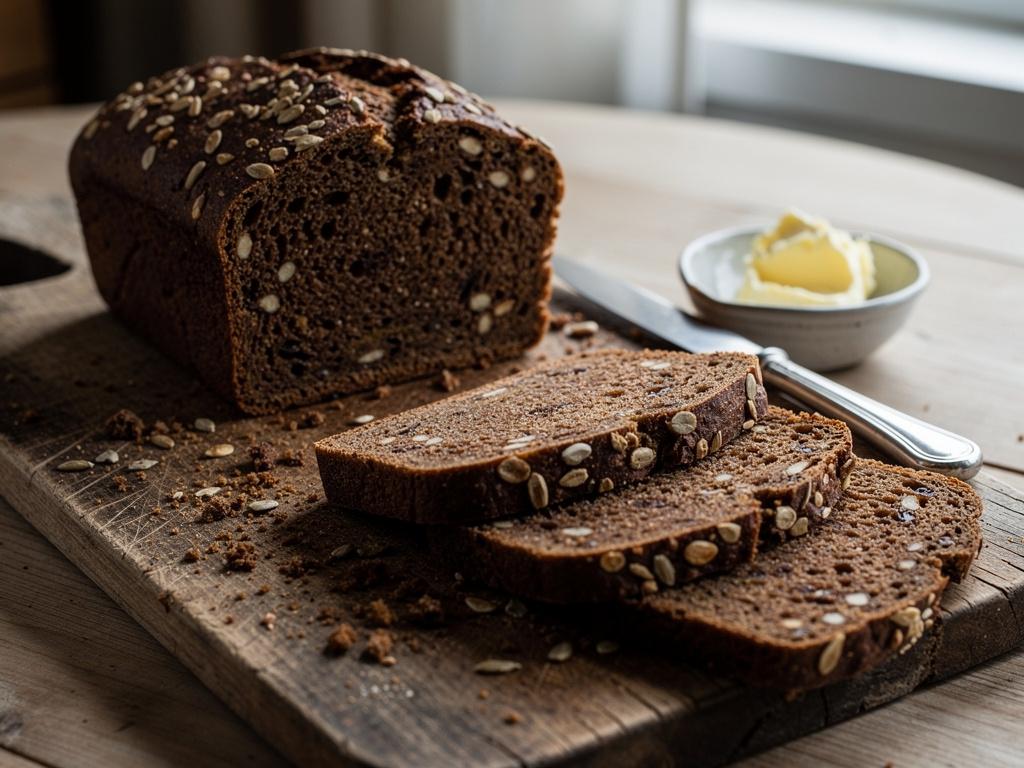
Rugbrød is the daily bread of Denmark, sliced thin for smørrebrød at lunch and often eaten again at breakfast with butter and cheese. Almost no two loaves are alike: every family, bakery, and grandmother has an opinion on the ratio of kernels to flour, and most guard a sourdough starter that has been fed and passed down for years.
The bread is deliberately dense. Rye has little gluten, so the dough is closer to a thick batter than a kneaded dough, and the whole kernels stay chewy inside the crumb rather than breaking down. That density is also what makes rugbrød keep so well on the counter, which mattered long before anyone had a freezer.
This version uses a fed rye starter for flavor along with a little active dry yeast to keep the rising time reasonable, so it fits into a normal two-day home baking rhythm rather than a week of starter maintenance.
How to make it
- 1
Soak the rye kernels
Combine the whole rye kernels and water in a bowl, cover, and let soak at room temperature overnight. The kernels will soften and plump but stay chewy.
- 2
Mix the dough
In a large bowl, stir together the soaked rye kernels with their soaking liquid, rye flour, all-purpose flour, rye sourdough starter, active dry yeast, dark beer, molasses, and salt until you have a thick, sticky batter with no dry flour left. Stir in the sunflower seeds and flaxseed. The dough will be much wetter than a kneaded bread dough; that is correct, do not add more flour.
- 3
Let the dough rise
Cover the bowl with plastic wrap and let the dough rise at room temperature until it looks aerated and has grown slightly.
- 4
Fill the pan
Grease a 9-by-5-inch loaf pan with the butter, then scrape the dough into the pan and smooth the top with a wet spatula.
- 5
Bake the bread
Bake at 350°F (175°C), tenting the top loosely with foil after the first 40 minutes if it browns too quickly. The bread is done when a skewer inserted in the center comes out without wet dough clinging to it.
- 6
Cool completely
Turn the bread out of the pan onto a wire rack and let it cool completely before slicing. Slicing warm rye bread turns it gummy.
A couple of tips
Keep a small portion of your starter back after mixing the dough, feed it, and refrigerate it for the next loaf; a healthy rye starter can be kept going for years.
The bread cuts more evenly, and tastes better, on the second day, once the crumb has had time to set.
If you don't have a rye sourdough starter, skip it and use two packets of active dry yeast instead; the bread will taste milder and keep for fewer days.
What you need
- 9-by-5-inch loaf pan
- kitchen scale for weighing the flour
- wire rack
Serving
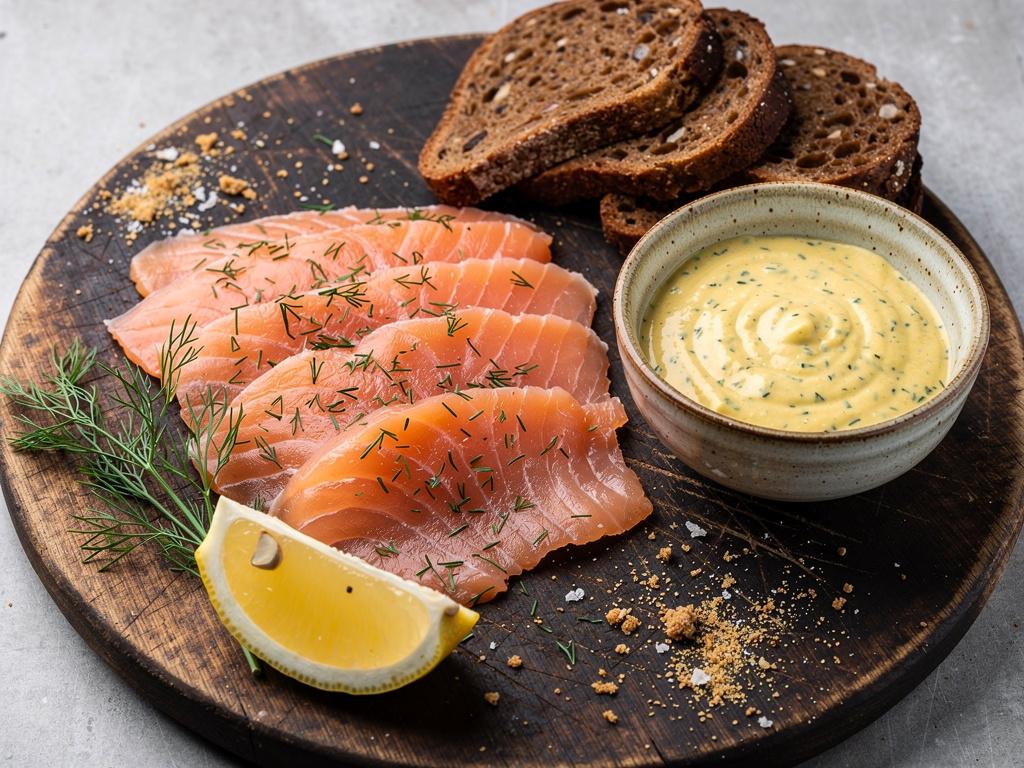
Slice thin and use as the base for smørrebrød: butter with liver pâté and pickles, pickled herring, or a slice of cheese with sliced radish.
Storing it
Wrapped tightly in plastic or kept in a bread box, rugbrød keeps at room temperature for about a week, and even longer in the refrigerator. Sliced and frozen, it keeps for up to three months and can go straight from freezer to toaster.
Nutrition per serving
| Calories | 280 kcal |
|---|---|
| Fat | 5 g |
| of which saturated | 1 g |
| Carbohydrates | 50 g |
| of which sugars | 3 g |
| Fiber | 8 g |
| Protein | 8 g |
| Salt | 1 g |
Questions and answers
- Can I make rugbrød without a sourdough starter?
- Yes, though the crumb will be milder and less complex; replace the starter with an extra 2 teaspoons of active dry yeast and a little more flour if the dough seems thin.
- Can you freeze Danish rye bread?
- Yes, slice it first and freeze the slices in a bag; they go straight into the toaster from frozen.
- Why is my rye bread dense and gummy?
- Rugbrød is meant to be dense, but a truly gummy crumb usually means it was sliced before it had fully cooled; let it rest for a few hours after baking.
- What can I use instead of dark beer?
- Water works fine, though the beer adds a little malty depth; a dark stout gives the strongest flavor.
- How long does homemade rugbrød keep?
- About a week at room temperature wrapped well, longer in the fridge, and up to three months frozen.
This dish belongs to
Collections
Similar recipes
How it was made
This recipe was written by a language model. Below is what it cost, how long it took and when each step ran, so you can see how the archive comes about.
- $0.177
- 2 min 24 sec
- 5
- Passed
| Date | Step | Model | Usage | Time | Cost |
|---|---|---|---|---|---|
| Sep 17, 2026 | Wrote the recipe | anthropic/claude-sonnet-5 | 6,554 in · 10,021 out tokens | 1 min 47 sec | $0.113 |
| Sep 17, 2026 | Checked food safety | anthropic/claude-haiku-4.5 | 1,694 in · 14 out tokens | 1.6 sec | $0.002 |
| Sep 17, 2026 | Made the picture | bfl/flux-2-pro | 1 image | 7.8 sec | $0.030 |
| Sep 17, 2026 | Worked out the nutrition | anthropic/claude-sonnet-5 | 1,639 in · 2,556 out tokens | 22.4 sec | $0.029 |
| Sep 17, 2026 | Set the collections | anthropic/claude-sonnet-5 | 1,489 in · 31 out tokens | 2.2 sec | $0.003 |